
Solidarity Sunday: A Hard Truth about "Later"
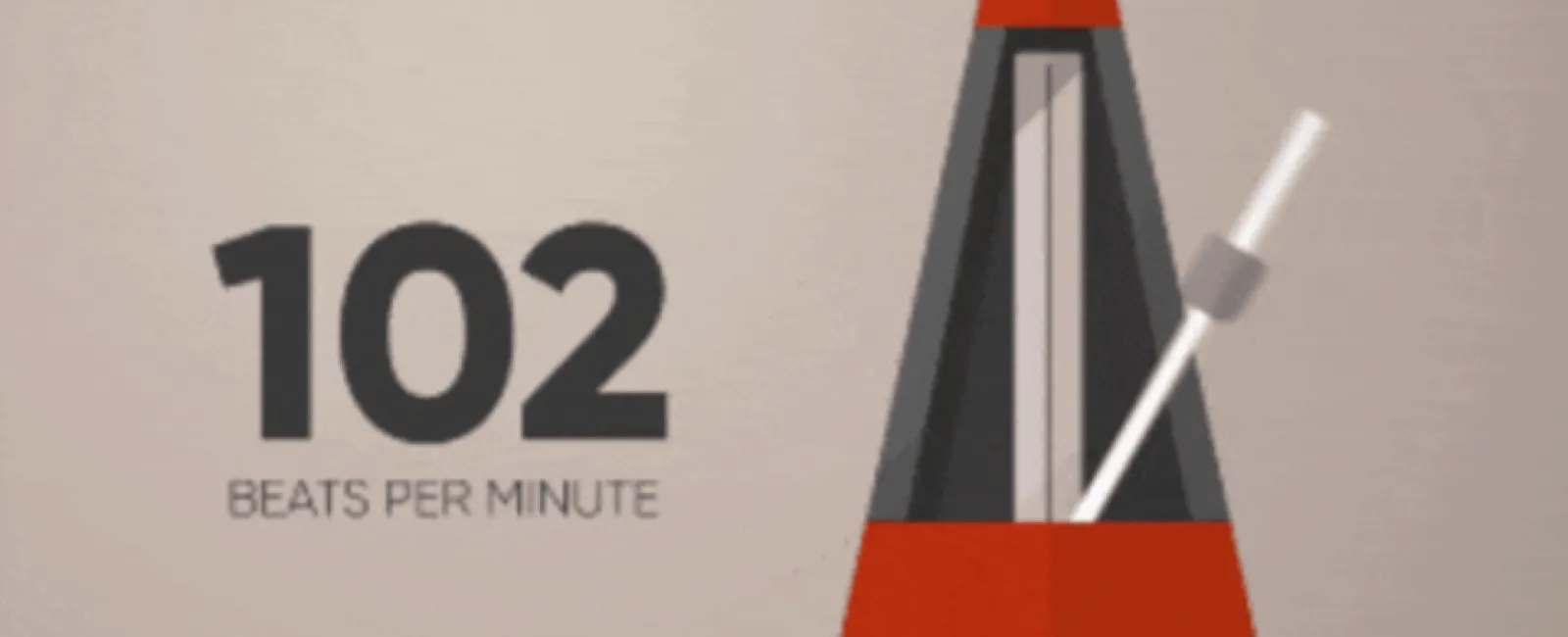
I was practicing a new lick on guitar the other night with a metronome, that little device that keeps time with a steady click. To aid my improvement, I set it to do something simple: every two measures, add one beat per minute. Two bars… click… slightly faster. Two bars… click… slightly faster.
And something jumped out at me.
The climb from 30 beats per minute to 50 felt like it took forever. But as each beat was added, time sped up. When it moved from 80 to 100, it flew by in a blink... so fast I could hardly keep up.
Same number of measures. Same metronome. But it felt completely different.
Right then it hit me: this is exactly what life does.
As we get older, we say the years start flying by. It turns out, that isn't a feeling, it's math. We don't experience life in neat calendar years. We experience it in proportions. Every new year becomes a smaller fraction of our life. A year when we're five is 20% of everything we've lived. A year when we're sixty-five is about 1.5%. The years don't feel equal because they aren't. As we add "clicks", as the years stack up, time doesn't just move forward. It speeds up. Literally. Mathematically.
And once we see that, it's hard to unsee. It changes how we think about the way we're told to live, especially the way we're told to think about things like retirement.
Let's be clear: retirement is good. People earn it. People deserve rest. It's one of the benefits unions fight for, our pension. This isn't a knock on retirement. It's a question about the story we attach to it… the story that says real life begins when work ends.
Here's the part that shook me: if we're lucky enough to retire at 65 and live healthy to 90, retirement looks long, 25 years. More than a quarter of our life.
But on the curve of experienced time, it's only about 7%. What looks like a long chapter on paper becomes a short paragraph in real life.
Maybe that lands harder for me because I'm in my 50s now. Maybe because we've all watched good people grind through years they can't stand, telling themselves they'll finally live later.
And I understand why. Life is expensive. People have families. People have obligations. Most of us don't get to design our days. We show up and deal with what's in front of us.
Still, once we understand how time works, "later" becomes a fragile plan.
Like my grandmother used to say: "If you wait your whole life for something, you'll wait your whole life." And the older we get, the more profound that becomes.
So how do we make use of this?
For me, it boils down to this:
Routine speeds time up. Attention slows time down.
The way we take advantage of this is by staying curious…by paying real attention on purpose. Not by trying to pay attention better to mundane tasks, that's not sustainable. I'm talking about paying attention by learning something new, taking a risk, learning a new skill, meeting new people, doing things that are uncomfortable, changing the routine…anything that causes us to show up fully and pay attention.
As I get older, I'm more convinced that the purpose of our work at Union Up isn't to just save for retirement and "get out of the game." It's to play our part well, to constantly learn new skills and tools, to serve the Locals we serve to the best of our ability with the time we have. We can't control the time we are given, we can control what we give to time.
And because time really does speed up, then the best parts of life can't be saved for later. They must be lived on purpose, right in the middle of it.
We don't get to slow the metronome down.
But we do get to decide how we play the measures we're given.