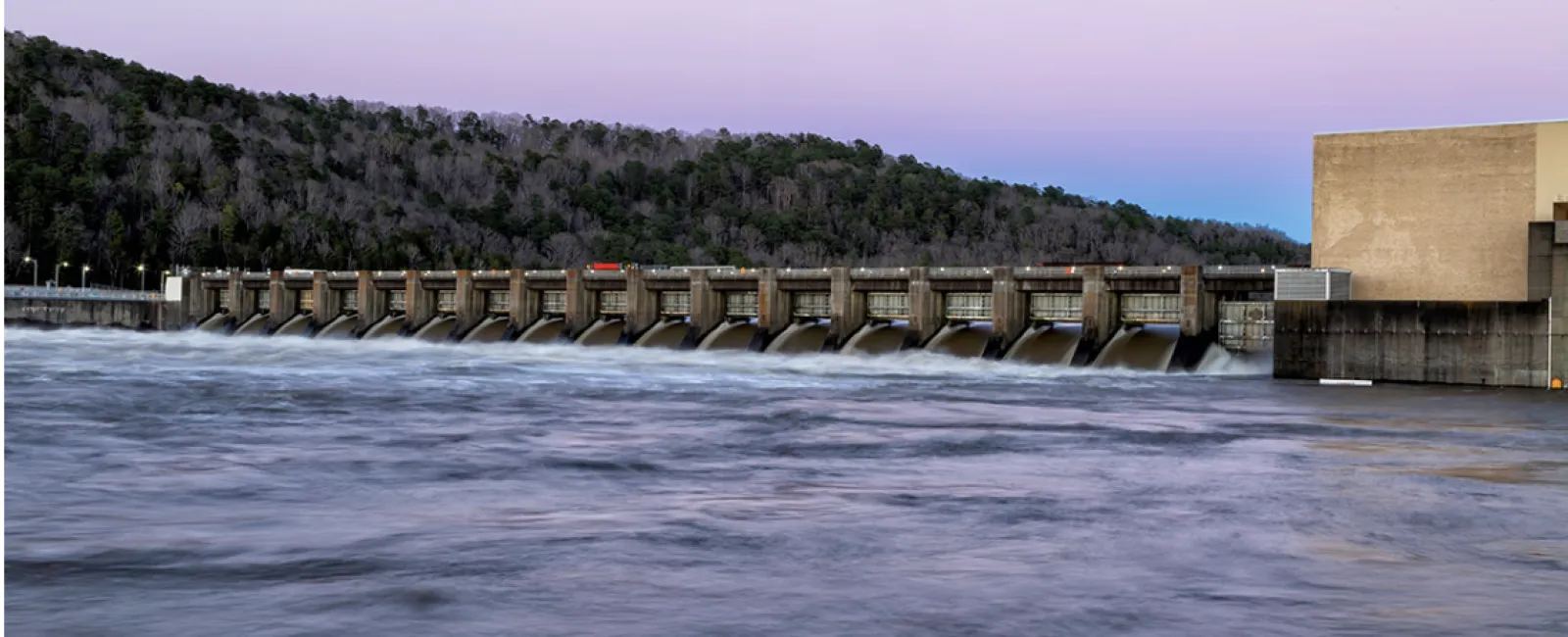
A few weeks back, we raised the issue of the threat that privatization of the TVA posed to union labor. Early signals that control of one of the nation's most important public utilities could be shifting away from the workers and communities it was built to serve.
Since then, the conversation has evolved.
The most recent new stories show the federal budget does not propose privatizing TVA or selling off its assets. That matters, and it's important to say it plainly. For now, there is no formal legislative push to sell TVA.
But if you're a business manager or a union member in the seven-state TVA region, that doesn't mean the situation has settled. It means the conversation has shifted. Understanding that shift is where the real work begins.
What we're seeing is not a single decision, but a series of smaller moves that shape direction over time.
TVA's CEO announced he will step down this summer following a period of significant political pressure and internal upheaval, and at the time of writing, a new CEO has yet to be named. At the same time, multiple board members have been removed, leaving the board without a quorum at points during a critical period of decision-making. More new nominees will soon be put forward for confirmation, which will ultimately determine who is steering TVA in the years ahead.
That matters more than any single headline about privatization. Boards determine strategy. Boards determine leadership. And boards determine whether an organization stays aligned with its original mission, or begins moving in a different direction.
At the same time, TVA is being pulled in multiple directions.
On one hand, it appears to be aligning closely with the administration's broader energy agenda expanding natural gas, investing in advanced nuclear, and playing a role in powering data centers where so many of our members work.
On the other hand, it is facing pressure from within the same political coalition, including highly visible public campaigns that have already influenced project decisions on the ground. That kind of push and pull creates uncertainty.
And uncertainty is where structural change often begins.
There's another piece of this conversation that deserves attention, and it's one that doesn't get as many headlines.
TVA's debt is projected to rise by several billion dollars over the next two years, bringing it closer to its federally capped limit, which was set in hard dollar terms in the 1970's. That debt is not new, and it's not unique to TVA. Large utilities, both public and private, carry debt as part of building and maintaining infrastructure.
Rising debt is one of those primary hot button arguments that politicians from both parties love to use to reopen conversations about restructuring or privatization. That doesn't mean it'll happen, it just means the groundwork for that conversation exists.
For union members, this is where the focus needs to stay grounded. This is not about whether public utilities are perfect. They're not.
This isn't about whether private utilities are the enemy. They're not. Many of our members make a good living working for investor-owned utilities across the country, and those jobs matter.
This is about understanding the difference in mission.
TVA was created to serve the people, to provide affordable power, help drive economic opportunity, and create stability in rural areas where private investment wasn't flowing.
That mission has helped sustain thousands of good-paying union jobs in states where those opportunities traditionally were not always easy to come by.
If that mission changes gradually, structurally, or over time the downstream effects will be felt by the people who rely on those jobs. Not overnight, but eventually.
Here's the bottom line and why it is important for Labor to keep an eye on it:
Privatization does not have to happen all at once to have an impact. It can happen through shifts in governance, selling off TVA's assets a little at the time, changes in priorities, financial pressure, and policy direction. Those decisions determine what gets built, where it gets built, and by whom.
That's why this moment matters even without a line item in a federal budget.
For business managers across the TVA region, the message to your members should be clear, steady, and grounded in reality. Nothing has been decided…. But a lot is in motion. And healthy amount of skepticism is warranted.
In right-to-work states, where union density is already under constant pressure, maintaining strong, stable, high-paying energy jobs requires awareness of what's going on long before any final decision is made.
I've adopted this topic with the goal of helping our clients and everyone on our mailing list to stay informed and engaged. The TVA is still what it has always been up to this point. It is one of the most important economic engines in the region, serving more than 10 million people and supporting thousands of union jobs. In this region where good union jobs are hard-won, the most important thing we can do is make sure they're not an afterthought in decisions that shape the future and that we have a seat at the table. It's not just what TVA is today, its what it becomes next. Our goal is to help keep public power in the hands of the public.